First, start with your Beat Sheet. If you are familiar with Blake Snyder’s Save The Cat, then you know what a Beat Sheet is. If not, let me explain. A Beat Sheet is a condensed outline version of your screenplay with a few caveats. Generally, there are roughly 15 beats that mark certain story points and progressions. They range from the Opening Scene/Image to The Set-Up of the protagonist in his/her world. It operates off the idea that there is a particular structure most movies have.
Second, use index cards to write out each scene. On a two-hour movie, or 120-page screenplay, the scenes per movie is somewhere between 40 and 60, give or take. Each scene can range between two to three pages. Write the action and characters of each scene onto an index card. E.g. – INT/APARTMENT: John confronts Jill about her infidelity.
Third, use the index cards to elaborate on each scene. Ideally you would be writing a paragraph or two in this portion. E.g. – John comes home early to surprise Jill with takeout and a bottle of her favorite wine. She is in the bedroom on the phone. He eavesdrops and hears her confess her undying love to her lover. John barges into the room, she hangs up quickly, and he confronts her.
Forth, describe any actions and revelations in the scenes. A scene should always reveal something new about the characters or move the story forward. E.g. – John eavesdrops and shows he already distrusts Jill. We can show John going through great pains in the scene to sneak into the apartment and tiptoe up to the bedroom door.
Fifth, insert dialog as you move forward. If dialogue strikes you, write it down. Even if it’s just one character’s dialogue, you can always come back later to add or take away. It’s important to get the dialogue on paper, no matter how bad you think it is.
Lastly, there are no hard and fast rules to creating an outline. In the end you should do what works for you. Do what comes easiest. Some scripts you may use all the above steps, while other scripts you may use only a few of the tools. As you become more proficient you will develop your own special tools for outlining your screenplays.
As always be inspired, be encouraged, and be collaborative.
Recently I was asked by my friend and fellow screenwriter to critique a short movie he had written. I agreed, but with slight hesitation. Why the hesitation you asked? I am not THAT screenwriter. At least that screenwriter in the traditional sense. I don’t always follow the rules. I don’t enter screenwriting contests and the ones I have entered have never been a blip on anyone’s radar. I usually have a lot of typos and sometimes struggle to keep the rules in order. Like when to use a FADE OUT or DISSOLVE or when not to use CUT TO after scenes. Or my favorite – how to properly write a montage scene and the difference between montage and a Mise en scene.
So, when someone asks me to critique their screenplay, I struggle.
To date I have written around 15 features and written and created several digital series, so I do know a little something, even if it’s only writing a bad script. I don’t do a lot of rewrites unless I intend to film them. There are a few things I hold to when writing screenplays.
Figure out your THEME.
In Blog #003 “What are Movie Themes?” I go in-depth discussing the importance of themes. Essentially, theme is a film’s dominant thought and unifying idea. It’s the thumbprint of film. It’s unique even if it’s been done in previous films. It will still be unique because it will be your spin on the idea. It is important to know what this is because all films are about things. Those things matter if you intend for your film to have some sustenance.
Syd Field’s Best selling screenwriting book.
Write a LOGLINE.
What is a logline? It is a one sentence that contains what, who, when, and why in every film. I can say I have never started any film or script without one. I am working on a script called The Visit that I intend to shoot late summer of 2022.
Here is the logline:
“A recently widowed neat freak entertains his free-spirited aspiring actor sister when her flight gets cancelled in Los Angles for the weekend.”
Loglines keeps the writer honest. It also communicates what your film is about without spending minutes explain every plot twist and inciting incident. Writing a logline forces you to conceptualize what your story is about in its totality, in one concise stroke.
Understand Basic Screenplay FORMAT.
I am not a screenplay snob. I am far from it. I don’t derive any pleasure from knowing all the minute intricacies of screenwriting. However, screenwriters should know the bare minimum.
What are slug lines, transitions, and action lines and how are they used in the screenplay? What is the basic breakdown of a 3-act structured screenplay?
Screenwriting is a craft. This means it’s an activity involving skill. You get skilled by doing. There are hundreds of books, online seminars, and classes that broach this subject. In 2022 there is no reason for an ill formatted screenplay, yet they exist.
Aaron Sorkin, Writer: The West Wing, Money Ball, The Social Network, Steve Jobs and A Few Good Men.
Too much DIALOGUE.
A Director of Photographer friend of mine named John Gardiner once said to me, “most first-time screenplays have way too much dialogue.” I never forgot this. He was correct. When I looked back on some of my earlier screenplays, and I had pages and pages of useless repetitive sentences of characters saying the same thing in different ways. My early screenplays sucked by the way. He suggested doing an edit pass after the first draft and cutting the dialogue by fifty percent. This is a practice I do to this day and am still amazed at the number of repetitive sentences I write. Screenwriting is about word efficiency and economy. You simply don’t need the fluff that would be in a novel.
READ other Screenplays.
Make a habit of reading screenplays. This is the quickest way to find out what’s wrong with your script. You see how Paul Haggis wrote his academy award winning movie, Crash. You can get a few lessons from Spike Lee by reading Do the Right Thing and see how Shane Black writes such vivid descriptions in Lethal Weapon. My point is read screenplays often. And don’t just read great screenplays, read some not-so-great ones too.
As always be inspired be encouraged and be collaborative.
Saki Bomb
Screenwriting Books:
The Screenwriter’s Bible: A Complete Guide to Writing, Formatting, and Selling Your Script by David Trottier
Story: Style, Structure, Substance, and the Principles of Screenwriting, by Robert Mckee
Having worked pre-production on several microbudget projects ranging from short film to full feature movies, I have seen the full spectrum as it relates to casting. I can honestly say casting can make or break your film. Here are a few commandments I think every micro budget filmmaker should include in their casting process.
Give yourself ample time to audition.
As a rule of thumb, you should start your casting three to four months from the start of principle photography. In theory if you follow this you have two to three months to cast and thirty days to allow the actors to study their script.
For example, if you give yourself 90 days then your first 30 days will consist of posting and reviewing several hundred: head shots, reels (if any), and resumes. The next 30 days will be auditioning the top 10 percent and converting the 10 percent into your top three actors. This process is duplicated for each role. You take the top three actors and discuss them with your production team. You weigh the pros, cons, and potential scheduling conflicts before making a decision. Never rush this step. If you need to push the film date back, then push the film back. This is the one step you must get correct.
Audition multiple actors for each role.
This sounds like a no brainer but trust me I have cast roles after auditioning just one actor. I did it for my last feature and it worked out fine. I wish, however, that I auditioned more, even if it’s just for the sake fortifying your bet/gamble on the actor you choose. Another reason why you should audition several actors is in case of a recast. You will have to recast at some point in your film career. I have recast on every single film project I have ever produced but if you have three actors who you have auditioned and vetted it’s easier to simply pick the next actor on your list.
Don’t cast the look. Cast for talent.
Film is such a visual medium that it’s easy for us to get caught up on how actors look. As a producer you get wrapped up with who you envision playing the role. I can’t tell you how many times I wrote a screenplay for Denzel Washington, Michael Ealy, or Idris Elba while knowing I couldn’t cast them. Or wrote screenplays with those actors in mind. When it is time to cast, I would look at every actor through my Denzel Washington casting glasses and be utterly surprised when none of these actors hit the unrealistic marks I had in my head.
You can also get caught up with how actors look on camera and forget about their acting abilities. Focus on whether or not the actor has range. Does the actor have craft? These are the important aspects every producer and director should pay attention to.
Make sure the Actor can take Direction.
Good actors want direction from directors. They crave this. They see this direction as a way to gauge performances and keep from over overacting. In casting it is slightly different. You want to know if the actor can give different performances when given notes (suggestions) or adjustments from the director. You also want to know if they are willing to take notes from the director on the set. You can see how this could be a huge problem and a guaranteed showstopper to your film. You would not hire someone if they could not perform work related task. Actors taking direction is a work-related function, so be certain.
As always be inspired be encouraged and be collaborative.
Let’s face it. Who does not love a story where in the beginning the character is flawed and in need of fixing and comes out completely transformed by the movies end? That is the magic of character arcs. Character arcs are the transformation or innermost journey of a character over the progression of a story. They are the hidden jewel in any film. They are the intangibles in storytelling that makes a movie well worth the telling of it.
Why are character arcs worth exploring in film?
Arcs plot the internal journey of your character. They are important because there are so many lessons that can be learned through growth and human nature. We learn about ourselves and the people around us. For storytellers, knowing the power of arcs is key to fashioning creative stories. Creating arcs in stories is easy as long as you stay open to the process. Keep asking questions about your character and you can have a character arc that even Stephen King would envy.
Let’s say you were to plot your journey as a high school freshman to a high school senior. You would start with the first day of your first year and maybe your mother is giving you a ‘pep talk’ in the car. Or maybe your father is giving the pep talk and it is his week with you because your parents are divorced. Are you nervous or confident about the first day? Do you have friends attending from middle school? Are you a jock or a nerd? Are you a musician? You nervously watch as other children enter the school. You watch and wait for the correct time to bail out of the car and disappear into the sea of students. You are at tipping a point in your life. You feel invisible. You feel unworthy and undeserving.
Let’s create a story and plot a character arc!
Second Wind
You the student will going on a fantastical journey for the next four years. There will be ups and downs and critical heart breaks along the way. Where do you live? Rural town? Metropolitan city? Where is your family ranked on the socioeconomic scale? Poor? Rich? Middle class? Are there bullies in the school? Are there drugs, drinking and sex involved? These external forces will help shape your story even further. They will help shape how you view yourself and your place in the world. You will experiment and take on friends who will expose you to different experiences. Do you have a girlfriend? Are you interested in girls? Maybe you are gay, trans, or other? Do you join a sports team or pursue other extracurricular activities? Is there a big game, tournament, talent show, or event you are obsessed about? Are these activities a rite of passage?
You take up cross country because you saw this beautiful sophomore smile at you on your first day. She’s a runner so you run to get close to her even though she is out of your league. Something happens while you are out running one day. You achieve this second wind, and it is blissful. There is a oneness of body, mind, and soul. All your problems seem to drift by the roadside. There is something about running that seems to put your crazy world into the right perspective. You find out that you are not the best runner, but you do have a love for it. Running keeps you focused and grounded. You stay away from gangs. You avoid the trappings of drugs and teenage pregnancy. You begin to fit in and find your place on the team. These friendships allow for you see life on the other side. You realize that life could better or worst. Your confidence is slowly developing. You begin to find your own voice.
It’s your senior year and there is so much on the line. You made the team by default, not by skill. You want to contribute to the team’s success and go out with a bang. So, you train. You train like your life depends on it. Your crush comes back from college to watch the team compete. She sees you. She wishes you luck. You tell her your name and she replies, “I know who you are.” At that moment something that has been developing in you for the last few years just clicks. You run your race and finish with your best time. Although you didn’t win the race, your time and place contribute to the team winning overall state championship. Your friends are proud and happy for you. You parents stop arguing long enough to enjoy this moment. Your crush gives you her number and invites you up visit her college campus. People see you and you are not invisible any longer. Were you ever really invisible?
The End
This is an example of a character arc that defines the character’s internal journey. We can clearly chart the character’s beginning. We can chart the actual journey through to the end. Our character went from feeling invisible to feeling and knowing that he is visible and seen. He goes on to have validating experiences that were reinforced throughout his high school experience. That is the marvel of storytelling. That is the power of character arcs.
As always be inspired be encouraged and be collaborative.
I had a fellow filmmaker ask me, “Where does the money go?”. By money he means the film budget if you are fortunate to have one. I decided to write a post that deals with this glossed over aspect. This will not cover insurance cost, legal fees, etc. These are extremely important to filmmaking for the crew and talent, but it will not be covered here. As always you should consult a professional and have all your bases covered legally when partaking in filmmaking.
Let’s start with a nice round number, let’s say 10k. I think 10k is a solid start for a micro budget film. I could consistently put out 75-minute films in 10 days give or take. Let’s also assume that the script is written, and you are not paying for a screenwriter to produce first, second, third, and fourth drafts. Let’s assume you are the director and producer. Let’s also assume that you have relationships with other filmmakers (i.e., DP, Grip, Sound, PAs, etc.) and you are not a newbie. Why? Newbies pay retail and you can’t make your films for 10k as a newbie. The same film will cost newbies 30k to 50k, easily.
Below is my personal break down and allocation of 10k for a 10-day shoot. I personally think 10 days is too long for a micro budget feature. So, try to shoot for 8 days with 1 day for pick up if necessary. Here are a few parameters I think you should incorporate.
Shoot your film for less than your budget, if possible. Off a 10k shoot aim for $8,500 or $9,000. This way you have $1,500 or $1,000 for unplanned expenses. Trust me they will come up. If you come under the budget, you can save the money for marketing and promotion or spread the love out to the cast and crew, if you are able.
When negotiating crew and actor rates never negotiate day rates, try to do a flat. If your actor rate day is $150 per day. $150/actor x 10 days = $1500. If there are 4 actors, then you are at 60 % of your budget already. Lead actors get more than costars and actors who are in just one scene get only food and credit.
If possible: Barter, Barter and, yes, Barter. Let your filmmaking friends know – if you can shoot, record, act, or PA for this flat fee then I will help you on your next project. When the time comes do what you promised.
Consolidate actor’s performances and see if you can shoot one or more actors’ scenes in one day. Actors maybe be willing to work with a flat rate if you wrap that actor in one or two days.
Ask anyone who has a home or apartment if you can film there for a nominal fee. You might be surprised. As a matter of fact, ask your fellow actors if you can use their apartments in exchange for casting them in your new film/films. It worked for me. If they agree, write them into the movie.
DO NOT cut corners with craft services. No fast food like McDonald’s or pizza. A well-fed cast and crew is a productive cast and crew.
Look for Student film crew to fill positions but check their work and ask qualifying questions when interviewing. Why? Because anyone can fudge a reel and resume.
You as the Director/Producer will not get a salary. Get use to it. Put all the money on the screen.
Tell your actors to come hair and make-up ready.
Shooting From The Hip Film Budget
Crew
Sound recordist – $900
Director of photography with film equipment – $900
Production Assistant – $700
Actors
Starring Actor – $800
Co-Star – $500
Co-Star – $500
One Scene Actors – Food/Credit
Locations – $1500
Post-production
Coloring -$1000
Post sound mix – $1000
Film editing – $1000
Food/Props
Food – $1500
Props/Set dress – $500
Gas and miscellaneous – $750
Total: $11,550
It seems we went over budget by $1550. It happens and trust me it will continue to happen in the wonderful, less than perfect world of micro budget filmmaking. The budget game is an ever-changing world of give and take. You take from one column only to give it to another. So, we didn’t come under budget, but we got the film in the can and at the end of the day that’s what’s most important.
As always be inspired, be encouraged and be collaborative.
So many new filmmakers limit themselves to scenes where they plop the actors down across from one another. They set the camera on a tripod and they yell, ‘action’. The actors run their dialogue and that is pretty much it. This would not be a big problem, if it were not for the entire movie being full of talking heads. The movie resembles more of a documentary than a narrative feature. Blocking and camera techniques should be used to help tell the story and maximize performances. Blocking can save your film from boredom.
Go Handheld. Go handheld, but only if the movie calls for it. There is something that screams cinematic when you go handheld. Micro movements add to the scene’s cinematic signature and it’s a natural energy that seems to breathe life into the scene. There is also a certain familiarity and intimacy with handheld films. Check out some of my favorites – The Blair Witch Project, City of God, Children of Men, and Open Water.
Open Water – 2003
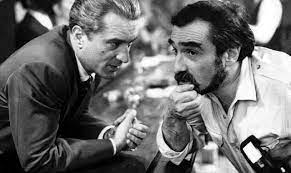
Tracking Shot. Tracking shots are when the camera moves and follows the actors through the real life of the movie. They are generally long film takes but not always. A tracking shot can be a simple shot following the actor from point A to point B. They can also be more in depth and complicated. Check out, GoodFellas (1990) and The Shining (1980). In GoodFellas, the camera follows Henry Hill and his date Karen Friedman through the back of the Copacabana. In this complicated sequence we are introduced the criminal underworld and bear witness to the power and respect Hill has. In The Shining the camera follows a boy on a tricycle throughout the eerie empty hallways of the massive hotel. This is an iconic shot as the audience follows a child as he explores the hotel and his creepy interaction with the supernatural. Tracking shots can be a game changer in your film project.
GoodFellas – 1990
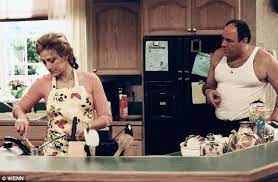
Give your actors chores. If the scene takes place in the kitchen why not give one actor the blocking where they: wash dishes, make coffee, make dinner, or sweep the floor. The other actor enters, and the dialogue begins. In my experience the actor almost always gives a more believable performance if they have a playable action. Visually it’s more interesting when there is movement in the scene. You can decide if the actor continues the chore while running dialogue or stops when the dialogue continues. Or do the chores intermittently by stopping on certain lines and continuing other lines.
The Sopranos – 1999 to 2007
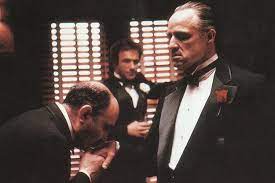
High Status/Low status. If one character is an employer, parent, or teacher and the other is an employee, child, or student the blocking should reflect that in the scene. It is normal for people to act or talk to authority figures in a particular manner. Why not show that in your movie? Mannerism and body language are tools directors and actors can use. If a scene opens on an employer and employee and the employer sits and puts his feet on the desk, the employer is at a high status and employee is at a low status. Let’s take this same scene and have the employee put his feet on the desk thereby reversing the statuses. If you can show how the status changes between the two characters as the film progresses, then you have a more compelling film. You have also showed the arc of both characters. We will explore character arcs in the next blog post.
The Godfather – 1972
These are not one size fit all solutions for your production but rather suggestions that can add some color to an uninspired film production. It can also lead you to your own discoveries or blocking and camera techniques.
As always be inspired, be encouraged, and be collaborative.
A film director is one of the most coveted jobs in filmmaking. It is easy to direct, right? You get to call the shots. All you do is call ‘action,’ ‘cut,’ and ‘quiet on the set.’ Now all that’s left is to shoot several movies and you will be mentioned with the likes of Spielberg, Lee, Duvernay, Tarantino, Nolan, and Cameron, right?
Not so fast there. The amount of disillusion in some new directors is mind boggling. Anyone thinking they can walk onto a set without ever taking a class, course, or reading a book, article, blog, or knowing the definition of film directing is in for a rude awakening. Think about it. What industry allows you to take a position before fulfilling educational requirements? Oddly there are a few and the film industry is one of them.
What Do Film Directors Do?
To date, the best definition I’ve heard is – “Directors are the creative leads of the film. They hold the creative vision throughout the whole process, from pre-production through to the final edit.” Directors do this and so much more.
This is just the tip of the iceberg of what directors do and, depending on how large the production is, they are expected to do more. Spike Lee has talked candidly about the many hats he had to wear while making “She’s Gotta Have It” in 1986. Not only did he write, direct, and act, but he catered at times. Let’s just say, the only time you’ll focus solely on directing is when you have every other position filled with competent crew members.
Following are five things that every director MUST know and do:
Know the Script
I can’t express this enough. Directors should know what happens before each scene they are about to shoot. They should know what happens after each scene they are shooting. They should know what is happening in each scene being shot.
Actors are going to ask you. Not because they want to test you but because they are focusing on being present in the moment so they can deliver outstanding performances. They need to keep the order of events straight since most movies are shot out of sequence. Nothing looks more unprofessional than a director who has to fumble with their screenplay every time an actor asks a question about what’s next.
Know What the Story is About
This is different from knowing the script’s order. This is different from the plot or summary. This is about theme. What is the theme of the story? I went into the relevance of themes on an earlier post titled, “What is Theme?”
As I mentioned in the post, themes are the blueprint of film. They are its DNA. Having a critical understanding of the theme helps directors shape the story and performances. Every solid story has one even if you are unaware of it.
Be Prepared for EACH Scene
What happens if an actor gives a performance that doesn’t have any hutzpah? What happens if the actor gives a surface performance and the inner life is missing’? What do you do if they overact? How can you help the actor if they give flat performances? The actor is stuck so you explain the character’s back story, hoping that will help. It does not. What do you do? Exactly. Without proper training your project can suffer if you can’t help the actor work through these artistic struggles. Directing is a craft.
So, it’s important to know:
The use of ‘as if’ and imagery tools as adjustment can help the actor.
Verbs are better than adjectives when discussing playable intentions.
What is the emotional event and how it can used in a scene when dissecting it with the actor?
What is result orientated directing and why should it be avoided?
Respect the Craft
Directing is a craft. It is a skill that can be learned and the more you practice the better you get. You can read books for knowledge and watch videos for information but doing is where it’s at. Learn the craft of acting as well. This will give some insight to the craft of acting and difficulty actors have.
Be Collaborative
Finally, filmmaking is a collaborative art form. Be open to any and all suggestions from your actors. You cast them for a reason. They have skills and talent and are yearning to be utilized. They are not marionettes simply here to play out the artistic aim of the director.
Saki Bomb
If you want to learn more about the craft of directing read: Directing Actors by Judith Weston, John Badham on Directing: Notes from the set of Saturday night fever, War Games and More
When it comes to filmmaking is it better to be a master aka specialist or jack of all trades? Throughout the years I have heard both arguments. I see the value in taking either path. Before starting your filmmaking career or expanding it, here are a few things you should consider.
So, for clarification as to what a specialist is, I mean you have one skill in the area of filmmaking, and it is your only or main area of expertise. For example, if you are a screenwriter or a director then you do this solely. If you are a screenwriter then you double down on this.
Now, I am not referring to the screenwriter who wrote a pilot and/or a short. I am talking about a screenwriter who sacrifices their time and resources studying the craft. You go to workshops or take screenwriting courses at USC in Los Angeles. You consume countless how-to books and read screenplays of your favorite movies daily. When you aren’t doing this, you are entering into screenwriting festivals trying to test your metal against other upcoming screenwriters. Some are actively seeking representation. This is how you grow and develop. This takes time. So, if you aren’t this invested or committed, it’s hard to be considered a “specialist”. People who devote this type of time rarely have room to do anything else because it’ s all consuming.
Jacks are peculiar filmmakers. They are Jacks either by necessity, interest, or both. The most common are by necessity. They bought the how-to books on screenwriting. They purchased the DVDs and read screenplays from their favorite movies and screenwriters. Their movie heroes are often writer/directors. Their screenplays may not have made the first or second round in any film festivals. After years of going through this and finally realizing no one will make their movie rather than lose hope they begin learning other aspects of filmmaking. They begin researching and studying cinematography and directing, which leads them down another rabbit hole called producing and editing. This takes years because the information is limitless. Somewhere in all this they are able to squeeze out a film or two.
Where do you fit it? Which do you lean more towards: Jacks or Masters?
I have done both but for the sake of this blog I would like to explore the cons to being a Jack or Master.
What are the Cons?
Master Cons:
You are a one trick pony.
You have to work within the system to make movies.
If you don’t know how to perform other functions of filmmaking you will have to pay for services, barter, or ask for favors.
Having no knowledge of the other functions may leave you at a disadvantage when it comes to negotiating rates or knowing how things work.
Having no knowledge of the other functions may leave you at a disadvantage when it comes discusses other aspects or the creative process.
You will have to spend more money overall to shoot every single film but you will have quality product.
Jack Cons:
You will be spread thin.
Let’s face it, there are only 24 hours in a day and there is only so much you can learn, so you may retain enough from every aspect of filmmaking to perform certain functions.
Most of your time will be spent either learning, researching, or doing.
Quality will be sacrificed in some areas and your product will reflect this.
Filmmaking will become less collaborative because as you learn you will reach out to fellow filmmakers less and less.
Turnaround from project to project will be lengthy and laborious.
If you are enamored with the Hollywood machine or wish to work in a system that is supported, then you are more likely to gravitate toward the master. It is appealing with the allure of money, red carpets, and A-listers. Not just that, it’s also the way a Hollywood movie makes us feel. We all have a love affair with movies that lead us to want to create them.
I chose the blue pill.
I did not want to wait on the Hollywood system to answer my call. I got tired of not getting into film festivals. I wanted to make movies by any means necessary. So, I did just that. Remembering there are no wrongs to filmmaking. Everyone is on a different path. Steven Spielberg’s path is no more relevant and honorable than Kevin Smith or Robert Rodriguez.
If you are starting out your filmmaking journey, try to consider the path that offers least resistance. Consider your strengths, weaknesses, time, and resources. At the end of the day your path will have more to do with your personality, sensibility, and creativity than anything else. Above all remember filmmaking is hard work and no one gets a pass on that.
Movies themes have always been the most difficult concept for me to grasp. The difficulty lies in the subjective nature and perception of the audience. Movies can sometimes have two or three themes as well and couple that with theme being extremely subjective. So, the theme the screenwriter has for the film may not be the one the audience sees.
Think of a theme as a film’s dominant thought and unifying idea. It can be summed up in one word or a phrase. It usually ‘evokes a universal human experience’. Every movie has a theme whether the screenwriter and filmmaker fail to identify them or intentionally created them. They are the embedded in the story’s DNA.
What is theme?
Examples include:
Money is root of evil
Absolute power corrupts absolutely
Love conquers All
Themes to a lesser existent are safeguards for the crew and cast. It’s important that everyone is making the same movie. The ability to explain in a word or universally understandable phrase is paramount. So, if your movie idea is “money is the root of evil” then can you see how the set designer, set props, wardrobe, lighting, film composition, sound, music, etc. all need to be resonating this theme in some shape or form. Assuming the storyline and dialogue are compelling, you would have the makings of a great film.
Themes outline the world in which the story will take place. Like glasses they bring what’s important into focus while effecting the character’s motivation and storyline.
While making my first feature, Rule of 3rds this past November 2021, I would often bring up the theme to remind the actors notes/keys to hit in different scenes as we moved from location to location. Notes or keys are terms I use help motivate actor choices while performing. To a lesser degree I wanted to speak to actor’s musical sensibilities by referring to notes (musical) they should be in while in a film sequence or scene.
The subjects of my movie were Abandonment/Second chances/Lost loves. On many levels the principals characters were grappling with all these themes. If I were narrow it down to one phrase it would be – ‘second chances at love are rare’. I had three principal actors and all were dealing with the themes vastly different one another. If you follow Save the Cat, and I do, characters will spell out the theme for the main characters to heed in the first ten minutes of the movie, but not always.
According to the author of Save The Cat, Blake Synder (every serious filmmaker should own a copy) he has this to say:
“Theme Stated (happens during the Set-up) – What your story is about, the message, the truth. Usually, it is spoken to the main character or in their presence, but they don’t Understand the truth… Not until they have some personal experience in context to support it.”
Save The Cat – Beat Sheet.
The most obvious example is Spider Man from 2002 – ‘with great power comes great responsibility’. Uncle Ben, played by actor Cliff Robertson, says this very phrase to Peter Parker/Spider Man and he shrugs the advice off. The theme carries more weight later in the movie as Spider Man grows in maturity. The theme was so popular and drilled home, other movies would use it as a running joke or bit.
The next time you watch a movie try and figure out what the theme is. Try to determine how the directors and actors use that theme throughout every scene and sequence. Doing this will help you develop your own skills and usage of theme in your projects.
Something remains to be said about what can be created despite not having a large budget, film school, or film pedigree. The audacity and bold naivety upcoming filmmakers need to have to believe they can make a film and have breakout success is nothing less than jaw dropping and awe-inspiring. This is the spirit that fuels the independent filmmaker.
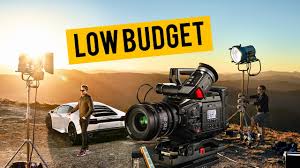
How did the rise of the micro-budget filmmaker come to be? Is there a difference between low-budget, ultra-low budget and micro-budget? Yes, anything under 2 million to 500k is considered low budget. The ultra-low budget range is in the 500k to 250k range while the micro-budgets can be considered anything below 100k. These numbers are ballpark ranges but vary from SAG-AFTRA and studio to studio. Personally, anything that can be mistaken as a nice yearly salary or 4-year college tuition I don’t consider micro-budget. But that’s me and I am not the authority.
I consider micro-budget something that you can save up or borrow without putting you or family on the soup lines. For me anything between 20k and 15k is the sweet spot. You can pull 5k out your savings and get a parttime job and save the rest over a one-year span and voila.
You have a respectable budget for a micro-budget film.
Now what?
Shoot your film and the admission is so low you can afford to get this totally wrong and not lose your shirt, unless 20k is your shirt. If it is, then just remember, Robert Rodriguez shot his for 7k. Heck, I shot my first feature for $3,500 and it included my round trip flight to Los Angeles from Newark, NJ.
Why the rise, or should I say what are the things that have contributed to the ‘rise’ of the micro-budget way?
Here is my take:
Inexpensive Camera Equipment
Micro-budget filmmakers don’t usually make a big stink over cameras. They don’t care about the latest RED camera or whether the movie should be filmed in 6K or 4K. The story matters the most. You can purchase a new Canon Rebel T7i with a kit lens for under a thousand dollars. If you go used and pick a later model that camera price can shrink significantly.
Affordable Intuitive Screenwriting Software
An accessible editing program micro-budget filmmakers have access to is Final Cut which is considered the industry standard. There is also Celtx, Movie Magic, and Writer Duet to name a few others. The price ranges from free online subscriptions to a couple hundred dollars.
Accessible Lighting and Sound Equipment
Micro-budget filmmakers realize they don’t have to own everything to make their movie because they can rent the things they don’t have. They can rent lights, sound, and accessories from companies like borrowlens.com, lensrental.com and sharegrid.com.
Finding Available Talent
Finding talent is as easy as creating an account on ActorsAccess.com and backstage.com. You can also reach out to the local community theater or community art program. You are sure to find a diamond in the rough.
Comprehensible Virtual Workshops and Online Training
Micro-budget filmmakers often don’t go to traditional school for education because they can be outdated and expensive. They get their information for micro-budget filmmaking from podcasts, YouTube tutorials, Lynda.com, etc.
There are plenty of resources available for filmmakers to gain access into the world of filmmaking. You can make your film unfettered from gate keepers. The only thing stopping you is you. I can’t wait to see what you create.
























 Shooting From The Hip