“Crafting Compelling Characters: The Art of Character Development in a Screenplay” – #016

A well-crafted screenplay is more than just a sequence of events and dialogues. It’s a world where characters come to life, capturing the audience’s imagination and emotions. Character development is at the heart of any great screenplay, as it breathes life into the narrative, making it relatable and engaging. In this blog, we’ll explore the art of character development in a screenplay, understanding its significance and sharing tips on how to create compelling characters.
The Significance of Character Development

Character development is the process of creating multidimensional and relatable characters who evolve throughout the story. It is a vital component of storytelling, as it allows the audience to connect with the characters on a deeper level, fostering empathy and emotional investment. Here are some key reasons why character development is essential in a screenplay:

  1. Audience Engagement: Well-developed characters make it easier for the audience to relate to and root for them. When viewers care about the characters, they become more engaged in the story, which can lead to a more satisfying cinematic experience.
  2. Conflict and Drama: Characters with depth and complexity can drive the story’s conflict and drama. Their flaws, motivations, and internal struggles can create tension and propel the plot forward.
  3. Arc and Growth: Character development often involves a character arc, where individuals undergo significant changes or growth throughout the story. This transformation adds depth and meaning to the narrative.
  4. Memorability: Iconic characters are often the most memorable aspect of a film. Well-developed characters can leave a lasting impression and become cultural touchstones.
Now, let’s delve into some strategies for crafting compelling characters.

Tips for Effective Character Development

  1. Know Your Characters Inside and Out: Start by creating detailed character profiles. Understand their backgrounds, motivations, fears, desires, and quirks. Think about their past experiences and how these shape their current behaviors. The more you know about your characters, the more authentic they will feel on screen.
  2. Show, Don’t Tell: Instead of telling the audience about a character’s traits, show them through actions, dialogues, and interactions. Let the audience discover the character’s qualities naturally, allowing for a deeper connection.
  3. Create Flawed Characters: Flaws make characters relatable and interesting. Nobody is perfect, and flawed characters have room to grow and change over the course of the story. These imperfections humanize them and make them more compelling.
  4. Give Them Goals and Motivations: What do your characters want? What are their driving forces? Having clear goals and motivations will give your characters purpose and direction, making their actions and decisions more understandable.
  5. Character Arcs: Consider how your characters will evolve throughout the story. What challenges will they face, and how will these experiences change them? A well-executed character arc can be the emotional heart of your screenplay.
  6. Unique Voices: Each character should have a distinct voice and personality. Their dialogue should reflect their individuality, helping the audience easily distinguish between them.
  7. Conflict and Relationships: Characters’ interactions with one another can reveal a lot about their personalities. Develop complex relationships and conflicts that showcase different facets of your characters.
  8. Backstory Integration: Use the character’s backstory strategically to inform their present actions and decisions. This can add depth and authenticity to their character development.

In the world of screenwriting, character development is an art that brings stories to life. By creating multidimensional, relatable characters with their own goals, flaws, and motivations, you can engage your audience on a profound level. Through character arcs and well-crafted relationships, you can craft a narrative that resonates emotionally and leaves a lasting impact. So, whether you’re writing a drama, comedy, or action-packed thriller, remember that compelling characters are the heart and soul of your screenplay.

As always be inspired, be encouraged, and be collaborative.

Saki Bomb

Subscribe to the blog!!! Follow us on instagram @_shootingfromthehip

“Sound is King: The Crucial Role of Audio in Filmmaking” – 015

In the world of filmmaking, the spotlight is often on the dazzling visuals, intricate set designs, and talented actors. While these elements undoubtedly play a significant role in creating a memorable cinematic experience, it’s essential not to overlook the unsung hero of the industry: sound. Good sound is the backbone of any successful film, elevating it from a mere spectacle to an immersive and emotionally resonant story. In this blog, we’ll explore the pivotal role that sound plays in filmmaking and provide examples of what constitutes excellent sound in the world of cinema.

Dialogue Clarity: Imagine watching a film where you can’t understand what the characters are saying due to muffled or inaudible dialogue. This is a classic example of poor sound design. Good sound ensures that every word spoken by the actors is crystal clear, allowing the audience to connect with the characters and follow the storyline without any distractions. Christopher Nolan’s “Dunkirk” is a masterclass in this regard, with meticulously crafted soundscapes that enhance the tension and urgency of the World War II narrative.

Soundtrack and Music: Music has the power to evoke emotions and set the tone for a film. A well-composed score or soundtrack can elevate a movie from being good to extraordinary. Take, for instance, Hans Zimmer’s work in “Inception.” The pulsating and haunting score not only complements the film’s complex narrative but becomes an integral part of the storytelling itself.

Ambient Sounds and Atmosphere: Effective sound design transports the audience to the world within the film. The subtle rustling of leaves, distant city sirens, or the chirping of birds can create a sense of place and time that immerses viewers in the story. Director Denis Villeneuve’s “Blade Runner 2049” is a prime example of how meticulously designed ambient sounds and atmospheres can build an otherworldly, futuristic setting.

Foley and Sound Effects: Foley artists and sound designers work tirelessly to create sounds that mimic real-life actions, adding authenticity to the film. Whether it’s the creaking of a door, the crunch of footsteps on gravel, or the roar of a spaceship engine, these subtle details breathe life into the visual narrative. A standout example can be found in the “Mad Max: Fury Road” franchise, where the high-octane action sequences are elevated by the visceral and impactful sound design.

Silence and Pause: Just as sound is essential, so is silence. Effective use of silence or carefully timed pauses can be as powerful as any sound. Director Quentin Tarantino is known for his skillful use of silence to build tension and anticipation in scenes, as seen in “Pulp Fiction” during the iconic “Royale with Cheese” conversation.

Sound Editing and Mixing: The final layer of the sonic experience is in the hands of sound editors and mixers. Their expertise ensures that all elements of sound in a film, from dialogue to music to sound effects, are balanced and seamlessly integrated. Movies like “Whiplash” owe a significant part of their success to the impeccable sound mixing, which makes the drumming sequences pulse with energy and intensity.

In conclusion, while visuals may capture our attention, it’s the sound that captures our hearts and emotions. Filmmakers and sound artists have long understood that sound is an art form in itself, capable of shaping the way we perceive and connect with a story. So the next time you watch a film, pay close attention to the sound, for it is the true king of the cinematic experience, reigning over our senses and emotions with its captivating prowess.

As always be inspired be encouraged and be collaborative.

Subscribe to the blog!!! Follow us on instagram @_shootingfromthehip

Saki Bomb

“Shedding Light on the Magic of Film Lighting” – #014

Lights, camera, action! If you’ve ever watched a movie and wondered how they create those mesmerizing visuals, you’re about to get the inside scoop on one of cinema’s best-kept secrets: film lighting. It’s the illuminating art form that turns a simple scene into a cinematic masterpiece. So, grab your popcorn, and let’s dive into the basics of film lighting with a touch of wit.

1. It’s All About Mood Lighting In the world of filmmaking, lighting isn’t just about banishing the shadows. It’s about setting the mood, and it’s moodier than a teenager on a rainy Monday morning. Whether it’s the warm, cozy glow of a rom-com or the eerie, spine-tingling darkness of a horror flick, lighting creates the emotional landscape of the film. Think of it as the film’s therapist, asking, “How do you feel, scene?”

2. Three-Point Lighting: The Star Trio Imagine you’re at a fancy dinner party, and the guests of honor are the key players in film lighting: the Key Light, the Fill Light, and the Backlight. The Key Light is the star of the show, providing the main illumination to the subject. The Fill Light is like a sidekick, softening the shadows created by the Key Light. Finally, the Backlight adds a touch of glamour, outlining the subject and separating them from the background. Together, they create Hollywood-worthy magic.

  1. Quality Matters (Lighting, Not Diamonds)
    In film, the quality of light is everything. It’s not about how expensive your chandelier is; it’s about how it makes your subject look. Soft light, often achieved with diffusers or bounce boards, can make actors look like they just stepped out of a dream. On the flip side, hard light creates dramatic shadows, perfect for those film noir moments when the detective is about to drop a killer one-liner.
  1. Colors, Gels, and Cinematic Flare
    Lights aren’t just white and boring. They come in all colors of the rainbow, thanks to gels. Cinematographers use gels to cast hues that match the film’s mood. For instance, a warm orange might evoke a cozy sunset, while a cool blue could transport you to an icy winter night. So, next time you see a film bathed in a specific color, you’ll know it’s not just mood lighting; it’s film mood lighting.

5. The Magic of Shadows What’s a great hero without a formidable villain? Shadows play the role of the antagonist in film lighting, adding depth, intrigue, and a dash of mystery. The interplay between light and shadow is where the cinematic magic truly happens. It can turn an ordinary face into a canvas of emotions or a regular alleyway into a haunting labyrinth.

Film lighting is the unsung hero of every movie, working its luminous charms behind the scenes to make the on-screen magic happen. The next time you watch your favorite film, pay attention to the subtle dance of light and shadow, and you’ll truly appreciate the artistry that goes into creating those unforgettable moments. Lights, camera, brilliance!

As always be inspired, be encouraged, and be collaborative.

Subscribe to the blog!!! Follow us on instagram @_shootingfromthehip

Saki Bomb

“Lights, Camera, Self-Tape: 5 Do’s and Don’ts for Aspiring Actors” – #013

In the era of virtual auditions and remote casting, the self-tape audition has become the actor’s best friend. It’s the modern-day equivalent of a live audition, but with a twist – you’re the director, cinematographer, and actor all rolled into one! So, grab your script, your camera, and a pinch of humor, as we delve into the world of self-taping with these five witty do’s and don’ts.

Do’s

Lighting: Find Your Inner Diva

Do bask in the glow of good lighting! Natural light is your best friend. Place yourself in front of a well-lit window, but avoid direct sunlight, unless you want to audition for the role of a solar flare. Soft, diffused light will make you look like the star you are. Don’t risk being mistaken for the neighborhood crypt keeper due to bad lighting.

Backdrop: The World Is Your Stage (Almost)

Do create a backdrop that doesn’t steal your spotlight! A plain, uncluttered background is ideal. Avoid taping in your laundry room with your unmentionables on display or against a poster of your favorite boy band from the ‘90s. Unless, of course, that’s the role you’re auditioning for.

Sound: Silence Is Golden

Do eliminate background noise! Your performance should be the only thing heard. Inform your neighbors that you’re not auditioning for the lead role in “Drunk Karaoke Night.” Keep pets, loud family members, and sirens at bay. Invest in a good microphone; it’s your ticket to crystal-clear audio.

Camera Work: Steady Wins the Race

Do invest in a tripod or a friend with steady hands! Shaky footage will make your performance look like an audition for “The Blair Witch Project.” Keep the camera at eye level, ensuring you’re framed from the chest up. Save the dramatic, handheld camera angles for your indie film debut.

Performance: Channel Your Inner Oscar Winner

Do bring you’re a-game! Treat this self-tape like it’s your one shot at stardom. Commit to the character, hit your marks, and deliver your lines with passion and conviction. Show them you’re not just an actor; you’re a force to be reckoned with!

Dont’s

Backdrop Blunders: Clutter Calamity

Don’t film in a cluttered or distracting environment! Your self-tape isn’t an episode of “Where’s Waldo.” Keep it simple and let the focus be on you, not on trying to decipher what’s on your bookshelf.

Wardrobe Malfunctions: Costume Catastrophe

Don’t dress for the wrong role! Avoid showing up as a space explorer for a period drama audition. Dress the part, but skip the full costume unless specifically requested. Leave the cosplay for Comic-Con.

Techno-Troubles: Don’t Be the Pixel Picasso

Don’t use outdated equipment! Grainy footage and pixelated faces are no one’s idea of a good time. If your camera dates back to the pre-smartphone era, it’s time for an upgrade. Your smartphone can do wonders with the right settings.

Monologue Marathon: Keep It Snappy

Don’t ramble on! Keep your self-tape under the specified time limit. Directors won’t appreciate a ten-minute soliloquy on your love for cat memes. Get in, deliver, and get out.

No Audition Aids: The Magic of Editing

Don’t rely on post-production magic! Directors want to see your raw talent, not your editing skills. Resist the urge to add filters, special effects, or a laugh track. This is not your stand-up comedy gig.

Remember, the self-tape audition is your chance to shine, and a touch of wit and preparation can go a long way. So, follow these do’s and don’ts, and break a leg (not literally) on your next self-taping adventure. You’re one audition closer to becoming the next big sensation!

As always be inspired, be encouraged, and be collaborative.

Saki Bomb

Subscribe to the blog!!! Follow us on instagram @_shootingfromthehip

“Learning how-to edit can make you a better Filmmaker.” -#012

A good friend of mine gave me the best filmmaking advice when I set out on my filmmaking journey in 2011. I recall it like it was yesterday. I had just finished shooting my last bit of footage for the LA-ish Documentary, my first film. I was complaining about how I couldn’t find any editors to edit my film. Eric Canada told me, “If you learn to edit, you will never need an
editor.”

So, one day, my friend Nolan Reynolds, a fantastic wedding videographer, gave me a laptop with Adobe Premiere. He showed me how to import footage, assemble clips, control audio gain, etc. I remember sitting there, expecting Nolan to edit it for me. He assisted me whenever I had any questions, of course. To be honest, I expected Nolan to edit the film for me, boy was I
surprised. I came over for the rest of the week and edited alongside Nolan, asking him questions whenever I had them. I learned how to edit over a period of weeks and became proficient over a period of years.

So, why learn how to edit?

Cost-Effective

Every task in filmmaking will either cost you time or money. Even if you are not paying someone to edit, it does take a considerable amount of time to do so. For example, a 2-minute music video that requires no post sound mixing, etc., can range anywhere from 10 hours to 40 hours for an edit that includes:
Assemble Draft
Color Grade
Special EFX

If you charge $30 to $50 per hour, a stylized music video can run $300 to $500 for 10 hours on the low end. Most people will have flat rates when it comes to editing. Those rates can range from $1000 to $3000 for micro-budget films. I, for one, don’t have $3000 laying around per film, so if you learn how to edit, you now have a nice skill set to accompany your shooting and directing. By the way, most clients assume you will be editing and don’t view it as a separate
expense.

Improves Film Intuition & Composition

My friend, Eric Canada, told me, ‘Shoot with the edit in mind’. What I took from that is, by learning how a film is put together in post, you’ll understand what is necessary and unnecessary to shoot. The freedom to create a shot list and the ability to adjust and pivot from that shot list to get the right coverage is vital.

Let’s say you had a two-actor scene to shoot with 3 camera angles (Medium shot, Close-up shot, and extreme close-up shot) per actor to film. You’re limited to two takes per camera for a total of 12 takes. What if an actor ran late and you have 1 hour to shoot instead of the projected 4 hours? Understanding coverage and editing can help you be decisive and efficient.

Editing Pace and Mood

Have you ever seen a film and thought, ‘They could have made it thirty minutes shorter’ or ‘it was too long in certain parts’? This means the pacing of the film is off. Editors control the pacing by choosing which footage to keep and take out. They also determine how long the footage should play in each sequence.
Of course, I am oversimplifying the entire process. Editors work in conjunction with the director and producers on the film project. However, if you are a director and producer, which most micro-budget filmmakers are, you’re well on your way to becoming a well-rounded creative by learning how to edit.

As always be inspired, be encouraged, and be collaborative.

Saki Bomb

“5 EASY STEPS TO WRITING YOUR FIRST SCREENPLAY USING AN OUTLINE” – #011

First, start with your Beat Sheet. If you are familiar with Blake Snyder’s Save The Cat, then you know what a Beat Sheet is. If not, let me explain. A Beat Sheet is a condensed outline version of
your screenplay with a few caveats. Generally, there are roughly 15 beats that mark certain story points and progressions. They range from the Opening Scene/Image to The Set-Up of the protagonist in his/her world. It operates off the idea that there is a particular structure most movies have.

Second, use index cards to write out each scene. On a two-hour movie, or 120-page screenplay, the scenes per movie is somewhere between 40 and 60, give or take. Each scene can range between two to three pages. Write the action and characters of each scene onto an index card.
E.g. – INT/APARTMENT: John confronts Jill about her infidelity.

Third, use the index cards to elaborate on each scene. Ideally you would be writing a paragraph or two in this portion.
E.g. – John comes home early to surprise Jill with takeout and a bottle of her favorite wine. She is in the bedroom on the phone. He eavesdrops and hears her confess her undying love to her lover. John barges into the room, she hangs up quickly, and he confronts her.

Forth, describe any actions and revelations in the scenes. A scene should always reveal something new about the characters or move the story forward.
E.g. – John eavesdrops and shows he already distrusts Jill.
We can show John going through great pains in the scene to sneak into the apartment and tiptoe up to the bedroom door.


Fifth, insert dialog as you move forward. If dialogue strikes you, write it down. Even if it’s just one character’s dialogue, you can always come back later to add or take away. It’s important to get the dialogue on paper, no matter how bad you think it is.

Lastly, there are no hard and fast rules to creating an outline. In the end you should do what works for you. Do what comes easiest. Some scripts you may use all the above steps, while other scripts you may use only a few of the tools. As you become more proficient you will develop your own special tools for outlining your screenplays.


As always be inspired, be encouraged, and be collaborative.

Saki Bomb

Four Do’s to Casting Your Next Microbudget Film – #009

Having worked pre-production on several microbudget projects ranging from short film to full feature movies, I have seen the full spectrum as it relates to casting. I can honestly say casting can make or break your film. Here are a few commandments I think every micro budget filmmaker should include in their casting process.

Give yourself ample time to audition.

As a rule of thumb, you should start your casting three to four months from the start of principle photography. In theory if you follow this you have two to three months to cast and thirty days to allow the actors to study their script.

For example, if you give yourself 90 days then your first 30 days will consist of posting and reviewing several hundred: head shots, reels (if any), and resumes. The next 30 days will be auditioning the top 10 percent and converting the 10 percent into your top three actors. This process is duplicated for each role. You take the top three actors and discuss them with your production team. You weigh the pros, cons, and potential scheduling conflicts before making a decision. Never rush this step. If you need to push the film date back, then push the film back. This is the one step you must get correct.

Audition multiple actors for each role.

This sounds like a no brainer but trust me I have cast roles after auditioning just one actor. I did it for my last feature and it worked out fine. I wish, however, that I auditioned more, even if it’s just for the sake fortifying your bet/gamble on the actor you choose. Another reason why you should audition several actors is in case of a recast. You will have to recast at some point in your film career. I have recast on every single film project I have ever produced but if you have three actors who you have auditioned and vetted it’s easier to simply pick the next actor on your list.

Don’t cast the look. Cast for talent.

Film is such a visual medium that it’s easy for us to get caught up on how actors look. As a producer you get wrapped up with who you envision playing the role. I can’t tell you how many times I wrote a screenplay for Denzel Washington, Michael Ealy, or Idris Elba while knowing I couldn’t cast them. Or wrote screenplays with those actors in mind. When it is time to cast, I would look at every actor through my Denzel Washington casting glasses and be utterly surprised when none of these actors hit the unrealistic marks I had in my head.

You can also get caught up with how actors look on camera and forget about their acting abilities. Focus on whether or not the actor has range. Does the actor have craft? These are the important aspects every producer and director should pay attention to.

Make sure the Actor can take Direction.

Good actors want direction from directors. They crave this. They see this direction as a way to gauge performances and keep from over overacting. In casting it is slightly different. You want to know if the actor can give different performances when given notes (suggestions) or adjustments from the director. You also want to know if they are willing to take notes from the director on the set. You can see how this could be a huge problem and a guaranteed showstopper to your film. You would not hire someone if they could not perform work related task. Actors taking direction is a work-related function, so be certain.

As always be inspired be encouraged and be collaborative.

Saki Bomb

HOW TO BUDGET FOR A MICRO-BUDGET FEATURE FILM? – #006

I had a fellow filmmaker ask me, “Where does the money go?”. By money he means the film budget if you are fortunate to have one. I decided to write a post that deals with this glossed over aspect. This will not cover insurance cost, legal fees, etc. These are extremely important to filmmaking for the crew and talent, but it will not be covered here. As always you should consult a professional and have all your bases covered legally when partaking in filmmaking.

Let’s start with a nice round number, let’s say 10k. I think 10k is a solid start for a micro budget film. I could consistently put out 75-minute films in 10 days give or take. Let’s also assume that the script is written, and you are not paying for a screenwriter to produce first, second, third, and fourth drafts. Let’s assume you are the director and producer. Let’s also assume that you have relationships with other filmmakers (i.e., DP, Grip, Sound, PAs, etc.) and you are not a newbie. Why? Newbies pay retail and you can’t make your films for 10k as a newbie. The same film will cost newbies 30k to 50k, easily.

Below is my personal break down and allocation of 10k for a 10-day shoot. I personally think 10 days is too long for a micro budget feature. So, try to shoot for 8 days with 1 day for pick up if necessary. Here are a few parameters I think you should incorporate.

  1. Shoot your film for less than your budget, if possible. Off a 10k shoot aim for $8,500 or $9,000. This way you have $1,500 or $1,000 for unplanned expenses. Trust me they will come up. If you come under the budget, you can save the money for marketing and promotion or spread the love out to the cast and crew, if you are able.
  • When negotiating crew and actor rates never negotiate day rates, try to do a flat. If your actor rate day is $150 per day. $150/actor x 10 days = $1500. If there are 4 actors, then you are at 60 % of your budget already. Lead actors get more than costars and actors who are in just one scene get only food and credit.
  •  If possible: Barter, Barter and, yes, Barter. Let your filmmaking friends know – if you can shoot, record, act, or PA for this flat fee then I will help you on your next project. When the time comes do what you promised.
  • Consolidate actor’s performances and see if you can shoot one or more actors’ scenes in one day. Actors maybe be willing to work with a flat rate if you wrap that actor in one or two days.
  • Ask anyone who has a home or apartment if you can film there for a nominal fee. You might be surprised. As a matter of fact, ask your fellow actors if you can use their apartments in exchange for casting them in your new film/films. It worked for me. If they agree, write them into the movie.
  • DO NOT cut corners with craft services. No fast food like McDonald’s or pizza. A well-fed cast and crew is a productive cast and crew.
  • Look for Student film crew to fill positions but check their work and ask qualifying questions when interviewing. Why? Because anyone can fudge a reel and resume.
  • You as the Director/Producer will not get a salary. Get use to it. Put all the money on the screen.
  • Tell your actors to come hair and make-up ready.

Shooting From The Hip Film Budget

  • Crew
    • Sound recordist – $900
    • Director of photography with film equipment – $900
    • Production Assistant – $700
  • Actors
    • Starring Actor – $800
    • Co-Star – $500
    • Co-Star – $500
    • One Scene Actors – Food/Credit
  • Locations – $1500
  • Post-production
    • Coloring -$1000
    • Post sound mix – $1000
    • Film editing – $1000
  • Food/Props
    • Food – $1500
    • Props/Set dress – $500
    • Gas and miscellaneous – $750

Total: $11,550

It seems we went over budget by $1550. It happens and trust me it will continue to happen in the wonderful, less than perfect world of micro budget filmmaking. The budget game is an ever-changing world of give and take. You take from one column only to give it to another. So, we didn’t come under budget, but we got the film in the can and at the end of the day that’s what’s most important.

As always be inspired, be encouraged and be collaborative.

Saki Bomb

4 FILM TECHNIQUES THAT CAN BOOST YOUR FILM – #007

So many new filmmakers limit themselves to scenes where they plop the actors down across from one another. They set the camera on a tripod and they yell, ‘action’. The actors run their dialogue and that is pretty much it. This would not be a big problem, if it were not for the entire movie being full of talking heads. The movie resembles more of a documentary than a narrative feature. Blocking and camera techniques should be used to help tell the story and maximize performances. Blocking can save your film from boredom.

Go Handheld. Go handheld, but only if the movie calls for it.  There is something that screams cinematic when you go handheld. Micro movements add to the scene’s cinematic signature and it’s a natural energy that seems to breathe life into the scene. There is also a certain familiarity and intimacy with handheld films. Check out some of my favorites – The Blair Witch Project, City of God, Children of Men, and Open Water.

Open Water – 2003

Tracking Shot. Tracking shots are when the camera moves and follows the actors through the real life of the movie. They are generally long film takes but not always. A tracking shot can be a simple shot following the actor from point A to point B. They can also be more in depth and complicated.  Check out, GoodFellas (1990) and The Shining (1980). In GoodFellas, the camera follows Henry Hill and his date Karen Friedman through the back of the Copacabana. In this complicated sequence we are introduced the criminal underworld and bear witness to the power and respect Hill has. In The Shining the camera follows a boy on a tricycle throughout the eerie empty hallways of the massive hotel. This is an iconic shot as the audience follows a child as he explores the hotel and his creepy interaction with the supernatural. Tracking shots can be a game changer in your film project.

GoodFellas – 1990

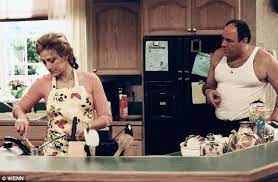
Give your actors chores. If the scene takes place in the kitchen why not give one actor the blocking where they: wash dishes, make coffee, make dinner, or sweep the floor. The other actor enters, and the dialogue begins. In my experience the actor almost always gives a more believable performance if they have a playable action. Visually it’s more interesting when there is movement in the scene. You can decide if the actor continues the chore while running dialogue or stops when the dialogue continues. Or do the chores intermittently by stopping on certain lines and continuing other lines.

The Sopranos – 1999 to 2007

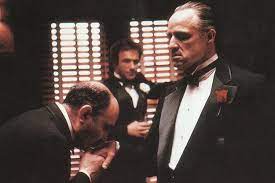
High Status/Low status. If one character is an employer, parent, or teacher and the other is an employee, child, or student the blocking should reflect that in the scene. It is normal for people to act or talk to authority figures in a particular manner. Why not show that in your movie? Mannerism and body language are tools directors and actors can use. If a scene opens on an employer and employee and the employer sits and puts his feet on the desk, the employer is at a high status and employee is at a low status.  Let’s take this same scene and have the employee put his feet on the desk thereby reversing the statuses. If you can show how the status changes between the two characters as the film progresses, then you have a more compelling film. You have also showed the arc of both characters. We will explore character arcs in the next blog post.

The Godfather – 1972

These are not one size fit all solutions for your production but rather suggestions that can add some color to an uninspired film production. It can also lead you to your own discoveries or blocking and camera techniques.

As always be inspired, be encouraged, and be collaborative.

Saki Bomb

HOW NOT TO SUCK AS A NEW DIRECTOR – #005

A film director is one of the most coveted jobs in filmmaking. It is easy to direct, right?  You get to call the shots. All you do is call ‘action,’ ‘cut,’ and ‘quiet on the set.’ Now all that’s left is to shoot several movies and you will be mentioned with the likes of Spielberg, Lee, Duvernay, Tarantino, Nolan, and Cameron, right?

Not so fast there. The amount of disillusion in some new directors is mind boggling. Anyone thinking they can walk onto a set without ever taking a class, course, or reading a book, article, blog, or knowing the definition of film directing is in for a rude awakening. Think about it. What industry allows you to take a position before fulfilling educational requirements? Oddly there are a few and the film industry is one of them.

What Do Film Directors Do?

To date, the best definition I’ve heard is – “Directors are the creative leads of the film. They hold the creative vision throughout the whole process, from pre-production through to the final edit.” Directors do this and so much more.

This is just the tip of the iceberg of what directors do and, depending on how large the production is, they are expected to do more.  Spike Lee has talked candidly about the many hats he had to wear while making “She’s Gotta Have It” in 1986. Not only did he write, direct, and act, but he catered at times. Let’s just say, the only time you’ll focus solely on directing is when you have every other position filled with competent crew members.

Following are five things that every director MUST know and do:

Know the Script

I can’t express this enough. Directors should know what happens before each scene they are about to shoot. They should know what happens after each scene they are shooting. They should know what is happening in each scene being shot.

Actors are going to ask you. Not because they want to test you but because they are focusing on being present in the moment so they can deliver outstanding performances. They need to keep the order of events straight since most movies are shot out of sequence. Nothing looks more unprofessional than a director who has to fumble with their screenplay every time an actor asks a question about what’s next.

Know What the Story is About

This is different from knowing the script’s order. This is different from the plot or summary. This is about theme. What is the theme of the story? I went into the relevance of themes on an earlier post titled, “What is Theme?”

As I mentioned in the post, themes are the blueprint of film. They are its DNA. Having a critical understanding of the theme helps directors shape the story and performances. Every solid story has one even if you are unaware of it.

Be Prepared for EACH Scene

What happens if an actor gives a performance that doesn’t have any hutzpah? What happens if the actor gives a surface performance and the inner life is missing’?  What do you do if they overact? How can you help the actor if they give flat performances? The actor is stuck so you explain the character’s back story, hoping that will help. It does not. What do you do? Exactly. Without proper training your project can suffer if you can’t help the actor work through these artistic struggles. Directing is a craft.

So, it’s important to know:
  1. The use of ‘as if’ and imagery tools as adjustment can help the actor.
  2. Verbs are better than adjectives when discussing playable intentions.
  3. What is the emotional event and how it can used in a scene when dissecting it with the actor?
  4. What is result orientated directing and why should it be avoided?

Respect the Craft

Directing is a craft. It is a skill that can be learned and the more you practice the better you get. You can read books for knowledge and watch videos for information but doing is where it’s at. Learn the craft of acting as well. This will give some insight to the craft of acting and difficulty actors have.

Be Collaborative

Finally, filmmaking is a collaborative art form. Be open to any and all suggestions from your actors. You cast them for a reason. They have skills and talent and are yearning to be utilized. They are not marionettes simply here to play out the artistic aim of the director.

Saki Bomb

If you want to learn more about the craft of directing read: Directing Actors by Judith Weston, John Badham on Directing: Notes from the set of Saturday night fever, War Games and More