Jack of all Trades Vs. Master – #004

When it comes to filmmaking is it better to be a master aka specialist or jack of all trades? Throughout the years I have heard both arguments. I see the value in taking either path. Before starting your filmmaking career or expanding it, here are a few things you should consider.

So, for clarification as to what a specialist is, I mean you have one skill in the area of filmmaking, and it is your only or main area of expertise. For example, if you are a screenwriter or a director then you do this solely. If you are a screenwriter then you double down on this.

Now, I am not referring to the screenwriter who wrote a pilot and/or a short. I am talking about a screenwriter who sacrifices their time and resources studying the craft. You go to workshops or take screenwriting courses at USC in Los Angeles. You consume countless how-to books and read screenplays of your favorite movies daily. When you aren’t doing this, you are entering into screenwriting festivals trying to test your metal against other upcoming screenwriters. Some are actively seeking representation. This is how you grow and develop. This takes time. So, if you aren’t this invested or committed, it’s hard to be considered a “specialist”. People who devote this type of time rarely have room to do anything else because it’ s all consuming.

Jacks are peculiar filmmakers. They are Jacks either by necessity, interest, or both. The most common are by necessity. They bought the how-to books on screenwriting. They purchased the DVDs and read screenplays from their favorite movies and screenwriters. Their movie heroes are often writer/directors. Their screenplays may not have made the first or second round in any film festivals. After years of going through this and finally realizing no one will make their movie rather than lose hope they begin learning other aspects of filmmaking. They begin researching and studying cinematography and directing, which leads them down another rabbit hole called producing and editing. This takes years because the information is limitless. Somewhere in all this they are able to squeeze out a film or two.

Where do you fit it? Which do you lean more towards: Jacks or Masters?

I have done both but for the sake of this blog I would like to explore the cons to being a Jack or Master.

What are the Cons?

Master Cons:

  • You are a one trick pony.
  • You have to work within the system to make movies.
  • If you don’t know how to perform other functions of filmmaking you will have to pay for services, barter, or ask for favors.
  • Having no knowledge of the other functions may leave you at a disadvantage when it comes to negotiating rates or knowing how things work.
  • Having no knowledge of the other functions may leave you at a disadvantage when it comes discusses other aspects or the creative process.
  • You will have to spend more money overall to shoot every single film but you will have quality product.

Jack Cons:

  • You will be spread thin.
  • Let’s face it, there are only 24 hours in a day and there is only so much you can learn, so you may retain enough from every aspect of filmmaking to perform certain functions.
  • Most of your time will be spent either learning, researching, or doing.
  • Quality will be sacrificed in some areas and your product will reflect this.
  • Filmmaking will become less collaborative because as you learn you will reach out to fellow filmmakers less and less.
  • Turnaround from project to project will be lengthy and laborious.

If you are enamored with the Hollywood machine or wish to work in a system that is supported, then you are more likely to gravitate toward the master. It is appealing with the allure of money, red carpets, and A-listers. Not just that, it’s also the way a Hollywood movie makes us feel. We all have a love affair with movies that lead us to want to create them.
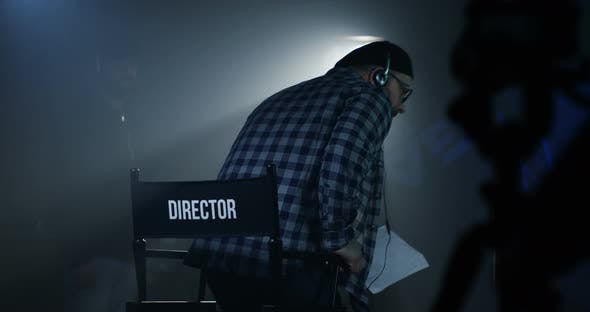
I chose the blue pill.

I did not want to wait on the Hollywood system to answer my call. I got tired of not getting into film festivals. I wanted to make movies by any means necessary. So, I did just that.  Remembering there are no wrongs to filmmaking. Everyone is on a different path. Steven Spielberg’s path is no more relevant and honorable than Kevin Smith or Robert Rodriguez.

If you are starting out your filmmaking journey, try to consider the path that offers least resistance. Consider your strengths, weaknesses, time, and resources. At the end of the day your path will have more to do with your personality, sensibility, and creativity than anything else. Above all remember filmmaking is hard work and no one gets a pass on that.

Saki Bomb

WHAT ARE MOVIE THEMES? – #003

Movies themes have always been the most difficult concept for me to grasp. The difficulty lies in the subjective nature and perception of the audience. Movies can sometimes have two or three themes as well and couple that with theme being extremely subjective. So, the theme the screenwriter has for the film may not be the one the audience sees.

Think of a theme as a film’s dominant thought and unifying idea. It can be summed up in one word or a phrase. It usually ‘evokes a universal human experience’. Every movie has a theme whether the screenwriter and filmmaker fail to identify them or intentionally created them. They are the embedded in the story’s DNA.

What is theme?

Examples include:

  • Money is root of evil
  • Absolute power corrupts absolutely
  • Love conquers All

Themes to a lesser existent are safeguards for the crew and cast. It’s important that everyone is making the same movie. The ability to explain in a word or universally understandable phrase is paramount. So, if your movie idea is “money is the root of evil” then can you see how the set designer, set props, wardrobe, lighting, film composition, sound, music, etc. all need to be resonating this theme in some shape or form. Assuming the storyline and dialogue are compelling, you would have the makings of a great film.

Themes outline the world in which the story will take place. Like glasses they bring what’s important into focus while effecting the character’s motivation and storyline.

While making my first feature, Rule of 3rds this past November 2021, I would often bring up the theme to remind the actors notes/keys to hit in different scenes as we moved from location to location. Notes or keys are terms I use help motivate actor choices while performing. To a lesser degree I wanted to speak to actor’s musical sensibilities by referring to notes (musical) they should be in while in a film sequence or scene.

The subjects of my movie were Abandonment/Second chances/Lost loves. On many levels the principals characters were grappling with all these themes. If I were narrow it down to one phrase it would be – ‘second chances at love are rare’. I had three principal actors and all were dealing with the themes vastly different one another. If you follow Save the Cat, and I do, characters will spell out the theme for the main characters to heed in the first ten minutes of the movie, but not always.

According to the author of Save The Cat, Blake Synder (every serious filmmaker should own a copy) he has this to say:

“Theme Stated (happens during the Set-up) – What your story is about, the message, the truth. Usually, it is spoken to the main character or in their presence, but they don’t Understand the truth… Not until they have some personal experience in context to support it.”

Save The Cat – Beat Sheet.

The most obvious example is Spider Man from 2002 – ‘with great power comes great responsibility’. Uncle Ben, played by actor Cliff Robertson, says this very phrase to Peter Parker/Spider Man and he shrugs the advice off. The theme carries more weight later in the movie as Spider Man grows in maturity. The theme was so popular and drilled home, other movies would use it as a running joke or bit.

The next time you watch a movie try and figure out what the theme is. Try to determine how the directors and actors use that theme throughout every scene and sequence. Doing this will help you develop your own skills and usage of theme in your projects.

Saki Bomb

Get new content delivered directly to your inbox.

“RISE OF THE MICRO-BUDGET FEATURE LENGTH FILMMAKER” PART II – #002

Something remains to be said about what can be created despite not having a large budget, film school, or film pedigree. The audacity and bold naivety upcoming filmmakers need to have to believe they can make a film and have breakout success is nothing less than jaw dropping and awe-inspiring. This is the spirit that fuels the independent filmmaker.

How did the rise of the micro-budget filmmaker come to be? Is there a difference between low-budget, ultra-low budget and micro-budget? Yes, anything under 2 million to 500k is considered low budget. The ultra-low budget range is in the 500k to 250k range while the micro-budgets can be considered anything below 100k. These numbers are ballpark ranges but vary from SAG-AFTRA and studio to studio. Personally, anything that can be mistaken as a nice yearly salary or 4-year college tuition I don’t consider micro-budget. But that’s me and I am not the authority. 

I consider micro-budget something that you can save up or borrow without putting you or family on the soup lines. For me anything between 20k and 15k is the sweet spot. You can pull 5k out your savings and get a parttime job and save the rest over a one-year span and voila.

You have a respectable budget for a micro-budget film.

Now what?

Shoot your film and the admission is so low you can afford to get this totally wrong and not lose your shirt, unless 20k is your shirt. If it is, then just remember, Robert Rodriguez shot his for 7k. Heck, I shot my first feature for $3,500 and it included my round trip flight to Los Angeles from Newark, NJ.

Why the rise, or should I say what are the things that have contributed to the ‘rise’ of the micro-budget way?

Here is my take:

Inexpensive Camera Equipment

Micro-budget filmmakers don’t usually make a big stink over cameras. They don’t care about the latest RED camera or whether the movie should be filmed in 6K or 4K. The story matters the most. You can purchase a new Canon Rebel T7i with a kit lens for under a thousand dollars. If you go used and pick a later model that camera price can shrink significantly.

Affordable Intuitive Screenwriting Software

An accessible editing program micro-budget filmmakers have access to is Final Cut which is considered the industry standard. There is also Celtx, Movie Magic, and Writer Duet to name a few others. The price ranges from free online subscriptions to a couple hundred dollars.

Accessible Lighting and Sound Equipment

Micro-budget filmmakers realize they don’t have to own everything to make their movie because they can rent the things they don’t have. They can rent lights, sound, and accessories from companies like borrowlens.com, lensrental.com and sharegrid.com.

Finding Available Talent

Finding talent is as easy as creating an account on ActorsAccess.com and backstage.com. You can also reach out to the local community theater or community art program. You are sure to find a diamond in the rough.

Comprehensible Virtual Workshops and Online Training

Micro-budget filmmakers often don’t go to traditional school for education because they can be outdated and expensive. They get their information for micro-budget filmmaking from podcasts, YouTube tutorials, Lynda.com, etc.

There are plenty of resources available for filmmakers to gain access into the world of filmmaking. You can make your film unfettered from gate keepers. The only thing stopping you is you. I can’t wait to see what you create.

SAKI BOMB

Get new content delivered directly to your inbox.

“RISE OF THE MICRO BUDGET FEATURE LENGTH FILMMAKER” Part I – #001

The micro-budget feature filmmaker isn’t new to film, but they are sort of an enigma. Initially I think they started out of necessity when the filmmaker could not get funding to make the films they wanted to make in Hollywood. Think about it like this: There is a system in place that is backed by wealthy financiers with the access to fund hundreds of millions of dollars into a single project. It has an educational system with a doctrine that supports its way of producing projects. It’s a business. It has unions. It has supervisors, managers, executives and presidents. It has gatekeepers.

The film equipment itself is extremely expensive. The 1982 Sci-Fi hit Blade Runner was shot with a Panavision Panaflex Gold w/ Panavision C-series and Super Speed Lenses. Since the company does not sell its camera, it only rents them. In 2015 you could rent it for $4000 per day for one camera. Not lenses. Not the cost of (actual) film. Not the crew. Not caterers. Not locations. Not insurance. Not transportation. Not lights. Just the camera. What happens if you need two cameras? So, on a 14-day shoot this becomes a $56,000 price tag and if you add a few days for pick-ups, the tag goes up from there. However, you are not a film studio so they most likely wouldn’t rent to you anyway, and if they did, you would need insurance to cover the replacement cost.  

Necessity is the mother of all invention and with that adage comes the film evolution (DSLR and Mirrorless). Cameras get smaller and more affordable. Costly film is replaced with digital storage. The cost of admission just got cheaper, and the internet explosion contributed to the exponential rise and every Tom, Dick and Harry can make a movie.

Cream always rises to the top and filmmakers aren’t any different. The point I am trying to make is making movies is expensive and up until now anyone who lived outside of the Hollywood bubble did not stand a chance until today. There are a few  filmmakers worth a mention who are above the fray.

What do these filmmakers have in common?
  • Kevin Smith – Clerks 27k
  • Barry Jenkins – Medicine for Melancholy 15k
  • Robert Rodriguez – El Mariachi 7k
  • Edward Burns – Newlyweds 9k & Brothers McMullen 23.8k
  • Oren Peli – Paranormal Activity 15k
  • Morgan Spurlock – Super Size Me 60k
  • Ava DuVernay – I Will Follow 50k
Each of these filmmakers:
  • Are household names
  • Established themselves in the film industry
  • Created films under or at 60k
  • Got their start as micro-budget filmmakers to a lesser degree

Kevin Smith produced his film Clerks for $27,000 in 1994 which went on gross over 3 million domestically. Barry Jenkins’ 2008 film Medicine for Melancholy was produced for $15,000. He would later direct Moonlight and If Beale Street Could Talk, earning Academy nods across the board for both features.

We all heard the story of Robert Rodriquez and his breakout film El Mariachi, which he produced, directed and wrote for 7k in 1992. The film would go on to win Sundance and would gross 2 million. Ed Burns filmed Brother McMullen in 1995 for $24,000 and it went on to gross 10 million domestically. After having a solid career as an actor and director he returned to his roots and shot The Newlyweds for 9k. Oren Peli produced Paranormal Activity for $15,000 and grossed nearly 108 million US and 85 million internationally.

Even documentary films can get in the mix. Morgan Spurlock’s groundbreaking 2008 documentary Supersize Me was produced for $60,000. It grossed over 11 million. Ava DuVernay’s I Will Follow was filmed for $50,000 and nominated for several awards, winning best screenplay in 2011 from the African American Film Critics Association.

I have always been fascinated by these film minimalists creating works of art in the shadows of big studios. It’s a testament to what can be done when necessity directly fosters the creative process. I do think these examples are the exception and not the rule. The chances of you making a $10,000 film and grossing 100 million is next to impossible. It’s like winning the ‘lottery’ as Alex Ferrari of Indie Film Hustle podcast calls it. It can happen – it probably won’t, but there is always the possibility, right? For any wannabe, micro-budget filmmaking is the key to honing your skills and getting your film in the can.

SAKI BOMB

Get new content delivered directly to your inbox.